

Journey to Easter
Dear Friends,
Each year we begin the season of Lent on Ash Wednesday with a service of Holy Communion and the receiving of ashes applied to our foreheads in the sign of the cross. The words of invitation in our Book of Common Worship invite us by saying:
“We begin this holy season by acknowledging our need for forgiveness proclaimed in the gospel of Jesus Christ. We begin the journey to Easter with a sign of ashes. This ancient sign speaks of the frailty and uncertainty of human life and marks the penitence of this community.”
As the ashes are applied, the following or similar words from Genesis 3:19 are said:
“Remember that you are dust, and to dust you shall return. Amen.”
Some of us from UPC Flanders and the other Mount Olive churches gathered for this purpose yesterday evening. But if you could not be there, you can still take part in this season of penitence and preparation for Easter.
“I invite you, therefore, in the name of Christ,
to observe a holy Lent by self-examination and penitence,
by prayer and fasting,
by works of love,
and by meditating on God’s word.”
Each person’s Lenten journey can be different but all lead to the Cross and the resurrection of our Lord Jesus Christ.
If you are looking for guidance on how or what to read in your bible start each morning with a prayerful reading of Psalm 51:1-17 or another Psalm. Then read from one of the gospels. My favorite is the gospel of Mark, but John is also recommended. May God bless you in your journey.
Pastor Cliff
Immersed in Culture, Immersed in Grace
Long before I came to the USA, I enjoyed watching American Football on a British TV channel. Just the highlights and some analysis were enough to satisfy my appetite. Then, in the fall of 2018, I was baptized into the local culture of football mania with various shows to feast upon and endless hours of football interspersed by just as many food, beverage and truck commercials. Such gluttony was unsustainable, and when we acquired three small children, there was no longer the time or opportunity for the football watching habit to continue except for the play-offs and the Superbowl itself.
This year, I might just get permission to see more of the play-offs and the big event with the family because at least one of our children is keen to play flag football. Therefore, this weekend, I’m hoping that we can catch up with the season we have missed by total immersion in the grid-iron culture once more as those first play-off games get under way.
Who will you be rooting for, or will you remain neutral? It’s always good to support the local team, but then, you may have other loyalties such as your favorite players, your hometown or even just your preference of uniform colors. I like to begin neutral but usually opt to support either the underdog or the team which plays clean and fair. If the two are the same, then all well and good.
Even though I grew up playing a two other kinds of football, there is a need for resident aliens like myself to identify and connect with the local citizens and inhabitants of this land. By doing so, I can begin to understand their passion and enthusiasm for the sport and enter into the experience of being American in some small way.
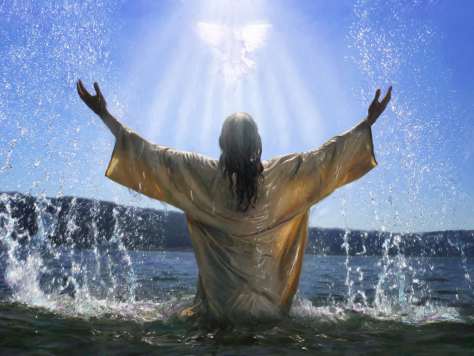
When Jesus came from Heaven to earth, He was both God and fully human and in order for Him to understand our human condition, He needed to embrace His humanity. This is why, though He was perfect and holy and without sin, He still needed to baptized in order to identify with us. This week, we encounter Jesus as we revisit His baptism in the River Jordan. It marks the beginning of His earthly ministry and Matthew’s account introduces us to the Holy Trinity, when God spoke, saying “This is my beloved Son, with whom I am well pleased.” And in that moment, the Holy Spirit descended upon Him like dove.
As we reflect on how Jesus identifies with us in our humanity, let us not forget to make time for Him in prayer so that we might be immersed in His presence and seek to connect with Him as His disciples.
Caring for Our Shared Home
Dear Friends,
Earth Day, which was on April 22nd, was in my sights a few weeks ago but I had no definite plans about what to do or how to observe it. And although a friend kindly gave me some flower seeds to sow in the garden, the big day passed me by and like many of you my good intentions became a missed opportunity.
Then, yesterday evening, after the children were in bed, I was scrolling through one of our TV channels (Prime) and found this year’s latest documentary movie about Regenerative Agriculture. The original was “Kiss the Ground” and the newest one is called “Common Ground” featuring some familiar faces and one or two new ones. If you don’t have Prime, you might struggle to see as I tried to watch some more of it on my laptop and hit paywalls. So, I suggest a watch party at our house or any friend you know with the same service.
The main thrust and thesis of the movie is that looking after the soil will help us and our planet to be healthier and mitigate the effects of Climate Change by drawing down the excess carbon from the atmosphere back into the ground where it belongs. So, whether you are gardening or farming we need to respect the soil science that tells us tilling is destructive, learn from the traditions of indigenous peoples and realize that soil is a living organism, not to be tamed or controlled but nurtured. Instead of using fertilizers and weed killers which kills the good organisms as well as the bad whilst damaging us in the process, we need to feed the soil with organic matter, avoid tilling or digging which disrupts the natural order and help to keep the carbon in the ground. We can plant cover crops which help protect and restore soil nutrients and support environments and ecosystems with which we can work in partnership.
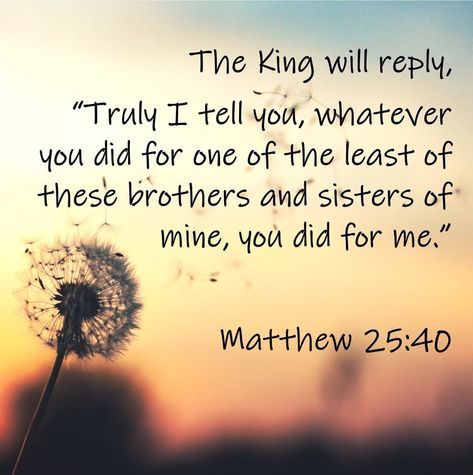
The Late Pope Francis who died last Monday was not only a champion for the poor and for social justice but also for the Environment. His papal encyclical Laudato Si on care for Our Common Home is part of his legacy. The subjects of his interest is no coincidence because poverty and the degraded environment are closely connected. When our planet is damaged and reacts with storms and floods, it is always the poorest people who get hit first and worst. Therefore, we have a duty not only for ourselves and our grandchildren but also to the most vulnerable in our world, as Jesus said, “whatever you did for the least of these, you did for me.” (Read “The Parable of the Sheep and the Goats” Matthew 25:31-45).
Pastor Cliff
Lost Sheep
Dear Friends,
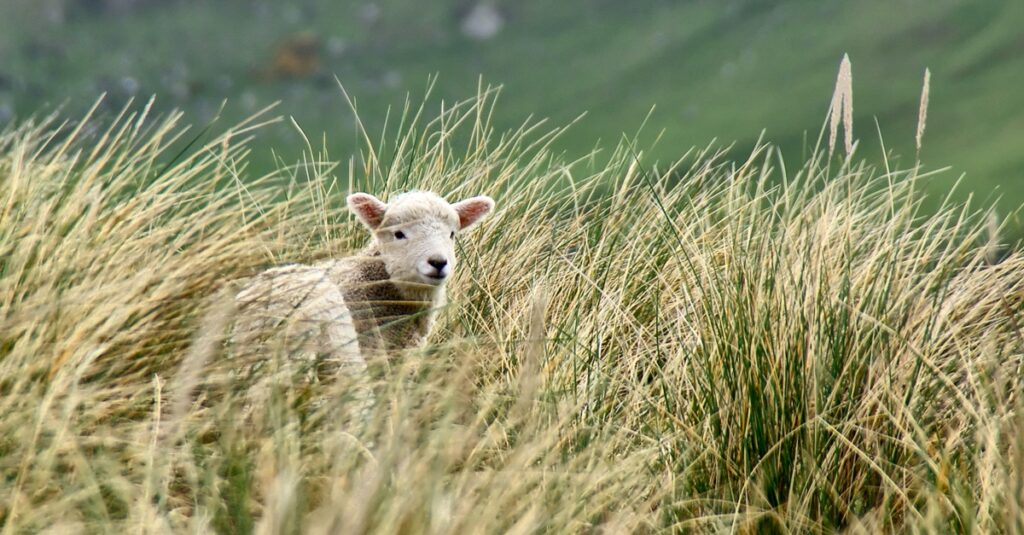
In my former parishes there was an abundance of shepherds who worked on the nearby farms. These were a hardy breed of individuals whose devotion to their sheep was remarkable. Just as the seasons rolled around, there was also the lambing season from late winter into spring, trimming their feet, then shearing during the warmer summer months and the mating of the ewes with a tupp or ram. In August every year, when the animals were in peak condition, the best sheep would be taken to the local agricultural show and entered into a competition. This was a wonderful occasion for the minister to spend time with the farmers as they showed off their hard work. Invariably, they were seldom in church because of their relentless workload of caring for their sheep.
Some shepherds opted for early lambing which was indoors from the New Year onwards, others went for the more traditional outdoor lambing in the fields or on the hillsides. The advantage of indoor lambing would eliminate predation by foxes and ravens. It also meant the lambs would be ready for market earlier the following year. The spring lambs enjoyed the milder spring weather but when lambing outdoors without the protection of the shepherd, there would always be some losses to predators.
Every day, I could set my clock by the regularity of the various shepherds through their attentiveness to their flock. You’d see their truck or quad-bike parked near a field and they would be found leaning on a gate as they watched their animals, counted them and assessed their well-being. After they had been served by the ram, they would receive a nutritional supplement in the form of sheep nuts to help see them through the winter and be ready for lambing season. The shepherd would walk through the flock with their bag of food and they would come running to him. All the time, he was able to assess how well they were moving and if any were ailing.
Early in its history, Israel celebrated its cultural heritage of shepherding. And spiritually, God was mentioned in scripture like a shepherd who cared for His sheep. The leadership in Israel were also likened to shepherds and Israel’s most famous king, David, began as a shepherd boy. It was his character, honed from shepherding that caused God to choose David as King. However, somewhere along the way, the religious elite came to look down on shepherds and fishermen because their work made them unclean. How ironic that the people of the land whose traditional profession was a reason for them to be made into outcasts and regarded as sinful. When Jesus, the carpenter from Nazareth, called Himself the Good Shepherd, He restored the image of the shepherd and gave dignity to the common man and woman who worked with their hands. He walked among His people and revealed God’s loving compassion to His flock, the lost sheep of Israel.
Pastor Cliff